
Characteristics
Fire survival cables are designed for continuous operation under extreme heat of up to 750°C / 950°C for up to 3hrs during a fire.
Applications
- Primarily used in circuits that are required to maintain their integrity during a fire.
- Used in fire alarm systems, access control systems, emergency lighting circuits, water sprinklers, sound and PA systems, security systems, tunnel ventilation etc.
- Areas of application include public address systems, emergency systems in metro rail, airports, power plants, high rise buildings, malls etc.
Cable Construction
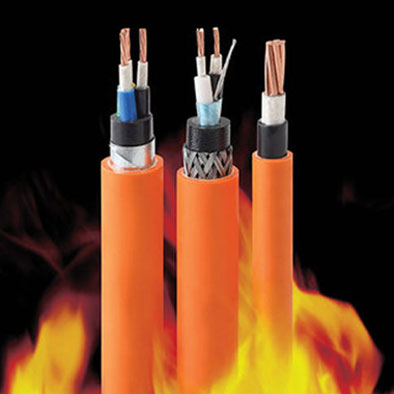
Conductor : Electrolytic grade annealed bare or tin-plated copper; Solid / stranded / highly flexible copper wires
Insulation : PVC / HR-PVC / XLPE / LSZH / Silicon Rubber / EPR / Special Polyolefins
Screening (if required) : Individual and Overall Screen or Overall Screen with Aluminium-Mylar Tape
Inner Sheath (if armoured) : FRLS / LSZH / Special Polyolefins
Armour (if required) : Single layer of round galvanised steel wires or flat galvanised steel strips
Outer Sheath : FRLS / LSZH / Special Polyolefins
Characteristics
- Withstands flame temperature of 750°C / 950°C for up to 3hrs without electrical breakdown at rated voltage
- Low emission of smoke and toxic fumes to help people escape / firefighters save people
- Does not propagate flame
- Meets BS: 6387 Cat CWZ, BS: 7846 (950°C for 3hrs)
Reference Standards
- IEC: 60331, BS: 7846, BS: 6387-CWZ, NFC32070, BS: 8434, BS: 7629
Circuit Integrity (Fire Resistance) Test
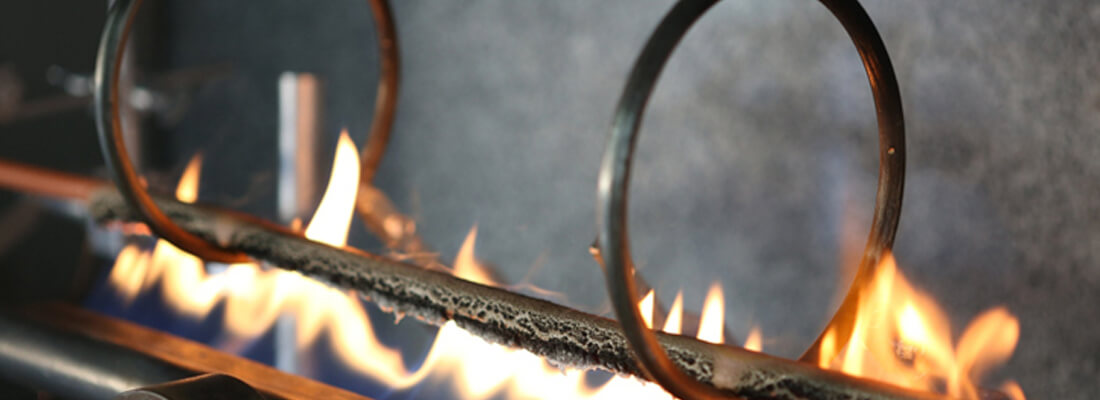
As per IEC 60331 / BS 6387 the test is carried out with the cable clamped above a burning fire of temperature 750°C / 950°C for 3 hrs with a connected power supply and load. The cable must continue to perform without breakdown and with continuous current flow for the whole 3 hrs under fire.